
-thumb.jpg?alt=media&token=019ab49d-cca3-4bdb-8a93-66154585a302)




-thumb.jpg?alt=media&token=2fa77185-d873-44af-a7bc-8588b27df90d)
-thumb.jpg?alt=media&token=4dd96fc0-d8a5-4086-b0ca-14dd2b09e1f3)
-thumb.jpg?alt=media&token=bcb59ea6-9b87-4e01-9a98-f705987284fb)




-thumb.jpg?alt=media&token=7b3dc456-4925-4fcf-90ad-c243d63d6a49)
-thumb.jpg?alt=media&token=e620fc70-1a18-4b72-804a-7f724e0c0718)
-thumb.jpg?alt=media&token=d5a9cb15-4c9d-48bf-b0e5-f3f823500085)


-thumb.jpg?alt=media&token=2329b1e6-56e6-4e9f-b3b3-d3c12545db8d)
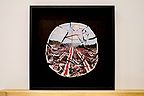




Nadya-Sayapina-thumb.jpg?alt=media&token=e94e657b-26eb-489a-a0af-0a00c0802051)
Nadya-Sayapina-thumb.jpg?alt=media&token=fd3bbb94-f50f-408e-a425-21657b52e525)
Nadya-Sayapina-thumb.jpg?alt=media&token=b2467938-59d3-460e-a3f3-44b29b4a7203)
Sasha-Velichko-(1)-thumb.jpg?alt=media&token=3b54d209-652b-4ce2-95dc-bfe893ee43d0)




























-thumb.jpg?alt=media&token=979bfd69-5e7b-4e4d-b546-ac3571eaeba5)








-thumb.jpg?alt=media&token=634cf4f7-88bb-408d-9f31-5ed1222cca49)
-thumb.jpg?alt=media&token=8ee334ef-ec53-4788-8dc3-be7a55833ab4)





The Mushroom and the Cloud
The World That Uranium Built
Chapter Wismut
"Nature does not know extinction; all it knows is transformation". — Werner von Braun, quoted in Thomas Pynchon, Gravity’s Rainbow, 1973.
At the dawn of the Cold War, Soviet geologists who arrived with the Red Army in the occupied German territories, discovered exploitable deposits of uranium ore—pitchblende—in the old silver mines of the Ore Mountains. This discovery granted the Soviet Union access to the radioactive material necessary to start developing its own nuclear arsenal. The first Soviet atomic bomb, filled with German uranium, was successfully tested in 1949, paving the way for the nuclear arms race and marking the onset of the Nuclear Age.
The presence of the strategic resource transformed the Soviet-occupied regions of Saxony and Thuringia into sites of intensive extraction, conducted by the Soviet-German uranium mining corporation Wismut. This soon positioned the newly established German Democratic Republic (GDR) as the principal uranium supplier for the Soviet nuclear programme, and one of the world’s leading producers of uranium ore.
The spatial impact of Soviet nuclear extractivism in the GDR echoed the global patterns of spatial reconfiguration inflicted by industrial extractivism worldwide. Yet its scale, pace, and intensity were often amplified by the strategic demands of the Soviet military-industrial complex. Wismut’s spatial assemblages bore the imprint of Cold War ideological imperatives and of the singular nature of the radioactive matter, while also reflecting local idiosyncrasies.
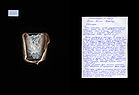
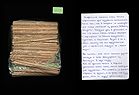
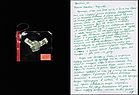
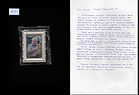
Centering on the example of the Soviet-German uranium mining corporation Wismut, the research exhibition The Mushroom and the Cloud examines how nuclear extractivism shaped spatial thinking and practice in the 20th century. It explores how these developments—understood as part of the broader nuclear condition—responded to, and ultimately transcended, the political confrontations of the Cold War.
Archives
Bergarchiv Freiberg; Landesarchiv Thüringen – Staatsarchiv Rudolstadt; Archiv vom Landesamt für Umwelt; Landwirtschaft und Geologie Freistaat Sachsen; Museum Uranbergbau Bad Schlema; Archiv des Thüringer Landesamts für Umwelt, Bergbau und Naturschutz; Library and Archives Canada; U.S. Geological Survey Library; Das Bundesarchiv Deutschland; Kreisarchiv Erzgebirgkreis Dienststelle Aue; Archiv des Sächsischen Oberbergamts; Stadtarchiv Gera; private archive Jens Kugler; private archive Frank and Harald Teller; Collection Canadian Centre for Architecture; gta Archiv der ETH Zürich
Photographic works by
Susanne Kriemann, Michael Beleites, Reinder Wijnveld, Robert Del Tredici, Arwed Messmer.
Exhibition graphic design
Lamm & Kirch with Jonathan Körner.
Help and advice by
Achim Drescher, Achim Hatzius, Adam Przywara, Alex Winiger, Alexander Komarov, Andres Kurg, Anna-Maria Meister, Andreas Kalpakci, Andrea Dutto, Angela Kugler-Kießling, Anke Hagemann, Arkadij Koscheew, Arwed Messmer, Astrid Mignon Kirchhof, Barbara Bitterli, Carlina Rossée, Cathelijne Nuijsink, Christian Tanke, David Bauer, Elisabet Jönsson Steiner, Falk Seliger, Felix Ackermann, Florian Lamm, Florian Szillat, Frank Vollert, Frederike Lausch, Fredi Fischli, Gabi Dolff-Bonekämper, Giovanna Borasi, Giulia Boller, Grit Ruhland, Harald Teller, Hermann Meinel, Ilona Krahmer, Irin Bailey, Ivana Milenkovic, Ives Cornish, Ksenia Litvinenko, Jason Bailey, Jean Souviron, Jens Löffler, Jens Kugler, Johannes Braun, Joe Bogner, Juliane Haase, Juliane Tomann, Julie Gayard, Jungyoon Kim, Karin Buerkert, Katja Stopka, Laurent Stalder, Liliana Iuga, Linda Stagni, Lu Di, Ludovicus Groen, Maarten Delbeke, Maria Buko, Maria Dębińska, Martina Walther, Matthew Critchley, Maximilian Lau, Melinda Bieri, Michael Beleites, Michael Karpenkiel, Miranda Robbins, Niels Olsen, Noelle Paulson, Paul Gayard, Philip Ursprung, Phyllis Lambert, Radu-Remus Makovei, Rafico Ruiz, Regine Butscher, Reinder Wijnveld, Reto Geiser, René Scheer, Sebastiaan Loosen, Susanne Kriemann, Toby Cornish, Tom Avermate, Tomomi Miyata, Ula Hramovich, Usch Schröder, Uta Ihlow, Uwe Grandke, Vendula Hnidkova, Wolfgang Kil, Yoshiharu Tsukamoto.