
-thumb.jpg?alt=media&token=019ab49d-cca3-4bdb-8a93-66154585a302)


-thumb.jpg?alt=media&token=b445adc8-0caa-4e61-b86e-f1bbae7fd5cd)


-thumb.jpg?alt=media&token=2fa77185-d873-44af-a7bc-8588b27df90d)
-thumb.jpg?alt=media&token=4dd96fc0-d8a5-4086-b0ca-14dd2b09e1f3)
-thumb.jpg?alt=media&token=bcb59ea6-9b87-4e01-9a98-f705987284fb)



-thumb.jpg?alt=media&token=59f8df3b-cb72-49c7-b967-4e8d8ebcc9ec)
-thumb.jpg?alt=media&token=d565333e-d487-4f88-bb01-dca76637edcf)
-thumb.jpg?alt=media&token=2c1df7d5-7835-45b2-b921-90c56126d262)
-thumb.jpg?alt=media&token=040ee23d-1009-4c24-9f96-cc95fa4d9614)
-thumb.jpg?alt=media&token=c01f3303-d50c-4679-9993-be23974aeb55)
-thumb.jpg?alt=media&token=e9b6301b-2383-4f3f-a286-082aae50fe54)
-thumb.jpg?alt=media&token=dbb946a3-6197-46cb-a59c-d210d58384a3)
-thumb.jpg?alt=media&token=9ec70bcf-ba13-45c8-b559-46125598af35)
-thumb.jpg?alt=media&token=494b256e-0ebe-4dad-bb5e-5e60db81c44c)
-thumb.jpg?alt=media&token=63c5434f-e91a-4df0-81d1-fb22dc9bdab6)
-thumb.jpg?alt=media&token=b3e2048c-aab6-40bf-9bea-61311673747b)
-thumb.jpg?alt=media&token=67f01036-f9f2-4acf-9c86-2afac300b43b)
-thumb.jpg?alt=media&token=a35dc9a3-004a-4cc5-a1cc-d9b22956ada7)
-thumb.jpg?alt=media&token=04b2d4f1-ab09-4997-8e2c-1bafae1094cc)
-thumb.jpg?alt=media&token=f0fa8cd6-82b6-4e94-aa3b-2697bdbadd1f)
-thumb.jpg?alt=media&token=bc946b7e-c1e2-4510-b6bd-2c4be906a9d7)
-thumb.jpg?alt=media&token=4939a1d8-df9e-4f9e-aaa9-2b7cf37b5d45)
-thumb.jpg?alt=media&token=14b7cbbd-8753-464f-b2db-8b67f1cd9f59)
-thumb.jpg?alt=media&token=810acec9-3c4f-44f8-b8d3-9a8bff9ce07a)
-thumb.jpg?alt=media&token=7039c7d3-9566-41d3-9233-aa4a5972052b)
-thumb.jpg?alt=media&token=bcd4b250-a819-4369-9caf-c1eb817b108c)
-thumb.jpg?alt=media&token=c2f5b4b8-bd38-4913-bd5d-45a98030773c)
-thumb.jpg?alt=media&token=c05705d2-d6bf-416a-9124-e8d3a2e20670)
-thumb.jpg?alt=media&token=47c986af-2007-41c4-90d6-9f2da716d5e3)
-thumb.jpg?alt=media&token=7ba356e9-ee7a-47e3-a820-39a2eb0d3376)
-thumb.jpg?alt=media&token=75a21c0d-fb3b-4e6e-8a8c-daf88561dbad)
-thumb.jpg?alt=media&token=870ad6fa-728e-4407-9426-f96ae891c392)
-thumb.jpg?alt=media&token=b78acfb6-cf3e-4c4d-8495-1cbb6c4e0414)
-thumb.jpg?alt=media&token=b6fefc79-f1a9-4c7b-a786-6968d2c097f6)
-thumb.jpg?alt=media&token=f17e68f7-46af-4c69-aebd-8d425266fd62)
-thumb.jpg?alt=media&token=72f077e3-00a8-415f-8107-8bf291b33c4d)
-thumb.jpg?alt=media&token=8819ee90-edd4-40c0-bf95-6befc51c17f9)
-thumb.jpg?alt=media&token=48e15981-5e14-481c-a9e0-a08578605e71)





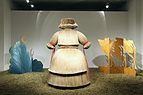
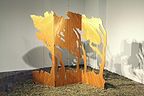
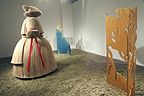
The exhibition's name is the name of a system that permeates reality and grows as an autonomous organism, inhabiting the space of a room. It domesticates itself here, creating an infrastructure capable of "providing assistance." It is an interface that proclaims care, yet we feel unsafe within it. Widespread surveillance and confinement control movements and gestures, thus revealing the logic of oppressive structures in which freedom is suspended and agency is dispersed in favor of the whole. At the heart of the question is visibility and invisibility, the delicate line between comfort and surveillance, and how biopolitics can care for life while simultaneously capturing its manifestations.
Through his ready-made practice, Alexander Adamau embodies the logic of "Hyperrealistic Mother" in a total installation inspired by children's interrogation rooms—spaces designed to minimize stress while simultaneously enabling recording and surveillance. This soft language of protection for the child becomes a starting point for a critique of systems that conflate care and control into a single, indistinguishable relationship.
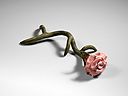
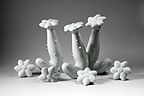
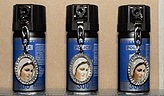
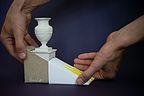
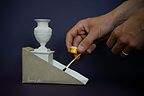
The exterior of the installation features modified pepper spray objects connected to a teardrop-shaped keychain with an image of the Virgin Mary. Through these objects, the artist comments on systems that regulate the expression of perspective. This type of power, which under the guise of care controls emotions, attention, and comfort, limits the scope of action, and alleviates anxiety by smoothing it out rather than solving the problem. In this context, a tear becomes a form of initiation: a moment when the body reacts faster than consciousness, revealing the truth about a system that wants to protect us but must first violate us.
The installation concludes with a banner featuring a reproduction of Marcel Duchamp's last work, "Étant donnés," where a glance through a narrow opening in a doorway reveals a reclining figure holding a lantern. Adamau continues the voyeuristic motif, but disrupts its conventions and confronts the viewer with a "forbidden" image.
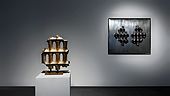
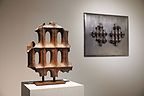
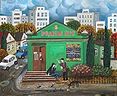
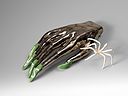
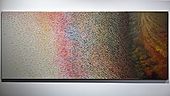
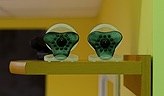
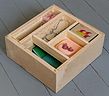
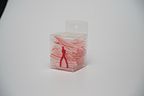
Inside, objects from the "Not-Toys" series, referring to the functioning of contemporary social systems, as well as selected works of Belarusian art, complement the exhibition with leather nipple shields—objects intended to ease the pain of breastfeeding and simultaneously, through contact with natural materials, "strengthen the warrior" within.
The entire exhibition focuses on moments in which the social body encounters soft, "maternal" technologies of regulation. Adamau questions what lies beneath the gentle tone and what desires fuel the power of power, which doesn't threaten but soothes; doesn't coerce but "replaces." Its practice is to imitate care in order to take the initiative. Its strength lies in assuming the role of subject: smoothing, equalizing, explaining, and adapting reality to a set of desired responses. The exhibition at "Szczur" invites us to enter this ambivalent space, where the soft infrastructure of power systems is so compelling that it's difficult to discern the moment when care begins to regulate, and assistance becomes a tool for smoothing out reality and alleviating conflicts before they can surface.
text: Liso Stec