


































Selected dates:
April 6 (18), 1989
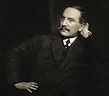
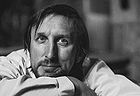
Born in Vitebsk (Russian Empire, today the Republic of Belarus) in the family of a cabinetmaker. His younger brother was Abram Veksler (1905–1974), a film artist.
1918
Veksler entered the communal art workshop of the Vitebsk Governorate, formed by Marc Chagall, and soon he began to study at the Vitebsk Folk Art School.
1920
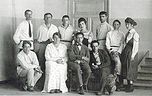
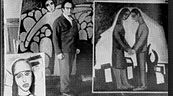
Veksler studied with the oldest Vitebsk realist painter Yehuda Pan and Marc Chagall. After the arrival of Kazimir Malevich, he, like most of the students, went to him, became a member of UNOVIS, although his young brother Abram became more interested in Suprematism.
1921
He was appointed head of the institute's painting workshop, at the same time he became a drawing teacher at the orphanage named after the October Revolution.
1922
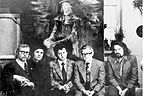
Veksler graduated from the Vitebsk Artistic and Practical Institute with a diploma "for the title of a free artist and a higher instructor with the right to teach in art technical schools." In the same year, the Veksler brothers, together with Malevich and the backbone of UNOVIS, moved to Petrograd.
1924
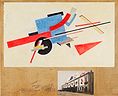
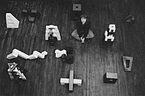
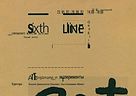
Became a member of the artistic council of the institute, was in charge of commercial and industrial poster workshops and a single poster workshop. Along with active production activities, Veksler was also engaged in research work. Known are his theoretical theses on the essence of commercial and industrial posters and reports "Letter poster", "Proportions of letters and font". He studied the dynamism of abstract compositions a lot, considering dynamics "the only means of influencing the viewer." In his posters, Veksler depicted the letter v as an independent geometric element in an abstract poster design. He sought to show each letter in the form of the simplest geometric figure - a triangle, a square, a circle. In this regard, his posters have become a continuation of the tradition of Suprematism with its simplicity of form and pointlessness.
1925
At the International Exhibition of Decorative Arts and Art Industry in Paris, the Leningrad Decorative Institute received a gold medal in the "Street Art" section. Much credit for this belonged to M. Wexler. For this exhibition, the artist created a poster for the stand of the Decorative Institute, as well as three panels: "Resort", "PREN", "Red Partisans".
1926–1940
The Decorative Institute was disbanded. In the same year, 1926, he became the head of the poster workshop at the Advertising Bureau for Theater and Spectacular Events. He worked in this position until 1940, inviting some of his employees from the Decorative Institute to the studio.
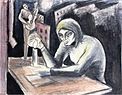
His best works include posters "Children of the Storm", "Rivals" (both 1926), exhibited at the anniversary exhibition of theatrical and decorative art in 1927, as well as at the exhibition "Artists of the RSFSR for 15 years" (1933, Moscow). His other posters of this time are "Decembrists", "Volga rebels", "Overcoat" (all 1926). In 1927, Veksler also took part in the Leningrad exhibition "Theatrical and decorative art in the USSR (1917-1927)". Veksler's posters of the 1930s-1940s were made in a more realistic manner and illustrative: "Petersburg Night" (1934), "Coming of Age", "Golden Lights" (both 1935), "The Girl Hurries to Date" (1936), "Without Guilt guilty" (1945).
1940–1941
He worked as an artist-consultant for Glavkinoprokat.
1941–1944
He worked as a laboratory assistant and teacher at the department of camouflage at the Higher Engineering and Technical School of the Navy, evacuated to Yaroslavl.
1944-1961
He was the chief artist of the scenery and props workshop of the Leningrad Theater and Production Plant.
June 24, 1976
Died in Leningrad. The wife of Mikhail Solomonovich was Alexandra Veksler, the couple had two daughters - Nina and Basya.