










Sasha-Velichko-(1)-thumb.jpg?alt=media&token=53e8f1c7-85c7-41a9-bce4-f1cd3dd6d28c)


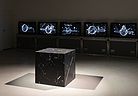
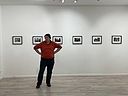





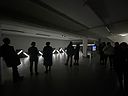
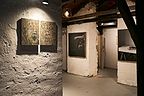
The first festival of Belarusian contemporary video art, the SAMASIEJ, took place. It was organized by the Center of Belarusian Culture in Białystok in collaboration with local and international partners, and with the support and initiative of the Mochnarte Foundation.
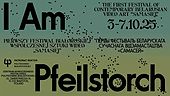
The first exhibition of the festival, titled “I am Pfeilstorch”, was curated by Uladzimir Hramovich.
In German, the word “Pfeilstorch” means “stork with an arrow.” It refers to storks that were wounded in Africa by a dart or arrow yet still managed to return to Europe in the spring to breed despite their injury.
The first and most famous Pfeilstorch was found in 1822 near the German village of Klütz. A spear from Central Africa was lodged in its neck. The bird was shot and later preserved through taxidermy.
This very Pfeilstorch became key evidence proving that birds undertake long seasonal migrations. Until then, people believed in myths — that birds hid underwater during winter or transformed into other creatures.
We are very pleased that some of the video works were created by the artists specifically during the Mochnarte residencies.
The festival’s name, SAMASIEJ, comes from the novel “Samosiej” (1981) by Sakrat Yanovich. Samasiej is a plant that grows on its own, regenerates, and thrives even in poor soil. For the festival organizers, it became a metaphor for culture that revives and flourishes even in the most adverse conditions.
The aim of the festival was to showcase the dynamics of contemporary Belarusian culture, document changes, stimulate dialogue, and find answers to questions such as: what contemporary Belarusian art looks like, where we are, and where we are heading.
- 2025
- 2024
- 2023
- 2022
- 2021
- 2020
- 2019
- 2018
- 2017
- 2016
- 2015
- 2014
- 2013
- 2012
- 2011
- 2010
- 2009
- 2008
- 2007
- 2004
- 2003
- 2002
- 2001
- 2000
- 1999
- 1998
- 1997
- 1996
- 1995
- 1994
- 1993
- 1992
- 1991
- 1990
- 1989
- 1988
- 1987
- 1985
- 1984
- 1982
- 1971
2025
2024
2023
2022
2021
2020
2019
2018
2017
2016
2015
2014
2013
2012
2011
2010
2009
2008
2007
2004
2003
2002
2001
2000
1999
1998
1997
1996
1995
1994
1993
1992
1991
1990
1989
1988
1987
1985
1984
1982
1971
eng Translation Pending Review
SAMASIEJ Festiwal Współczesnej Białoruskiej Sztuki Video
October 2 –
6, 2025
The Belarusian Cultural Center in Bialystok


Associated Documents
![]() Bergamotparticipant
Bergamotparticipant![]() Jura Shustparticipant
Jura Shustparticipant![]() Nadya Sayapinaparticipant
Nadya Sayapinaparticipant- Юлия Цветковаparticipant
- Роза Буселparticipant
![]() Lesia Pcholkaparticipant
Lesia Pcholkaparticipant![]() Daria Sazanovichparticipant
Daria Sazanovichparticipant![]() Uladzimir Hramovichcurator
Uladzimir Hramovichcurator- Таня Лічэўскаяparticipant
- Тытус Шабельскі-Ружнякparticipant
- Владимир Боханparticipant
![]() Hanna Panyutich (XYANA)participant
Hanna Panyutich (XYANA)participant- Марыя Немчанка-Аржанічparticipant
- Olga Anna Markowskaparticipant